𝐌𝐔𝐒𝐓 𝐝𝐫𝐢𝐥𝐥𝐬 𝐌𝐀𝐂𝐎𝐃𝐀 𝐬𝐭𝐚𝐟𝐟 𝐢𝐧 𝐂𝐨𝐦𝐩𝐮𝐭𝐞𝐫 𝐀𝐢𝐝𝐞𝐝 𝐃𝐞𝐬𝐢𝐠𝐧 𝐟𝐨𝐫 𝐤𝐧𝐢𝐭𝐭𝐢𝐧𝐠 𝐬𝐨𝐟𝐭𝐰𝐚𝐫𝐞
Posted By
James MphandePosted on
8th Jan, 2026
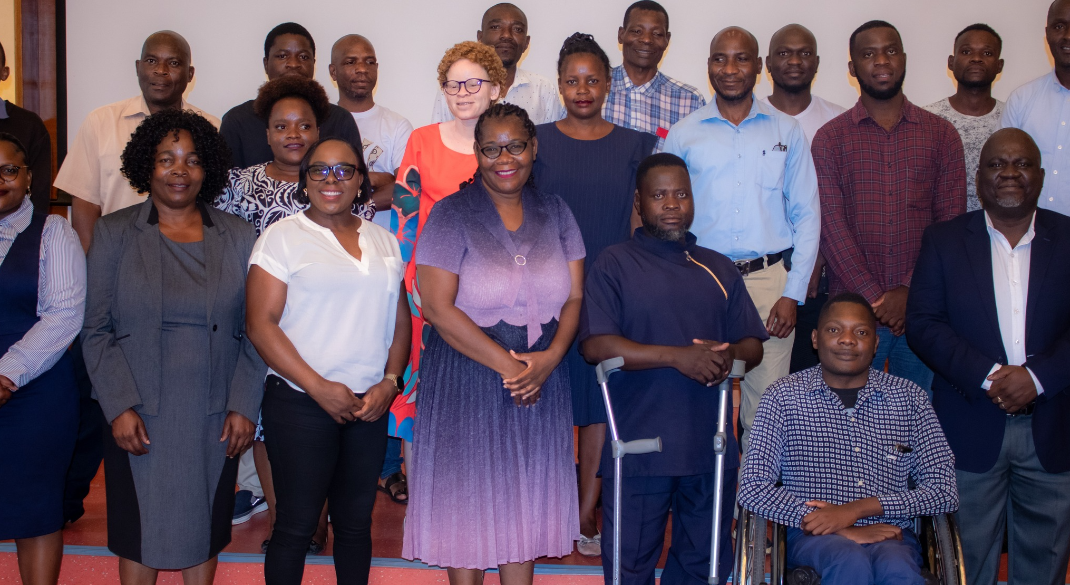
On December 1, 2025, a team from the Malawi Council of Disability Affairs (MACODA), formerly MACOHA, began a five-day training program at MUST, reaffirming the university’s commitment to delivering inclusive and industry-relevant training.
The program, funded by UNDP under the Digital for Transformation (IDT4M) project, aims to bridge the gap between traditional manual design methods and modern computer-aided technologies.
It is expected to equip participants with technical skills that match current labour market demands.
Speaking during opening session, Executive Dean for Malawi Institute of Technology (MIT), Dr Michael Zimba, said the training would strengthen participants’ creative and innovative capacities, ultimately enhancing both the aesthetic and functional quality of designed materials and final products.
Mercy Mpunga, Centre Manager for MACODA Bangwe Weaving Factory, noted that use of CAD in knitting software will increase accuracy and consistency, improve production efficiency, reduce operational costs, and support seamless workflow integration.
Facilitator Dr Priscilla Maluwichi said upon completion, they expect participants to be able to streamline design processes, automate repetitive tasks, and generate technical drawings more efficiently leading to faster production cycles.
Gilbert Nseula, a trainee, described the program as game-changer for the knitting industry.
"The training offers an invaluable platform for aspiring designers. It will not only enhance our technical proficiency and unlock creativity but also help us maintain industrial relevance,” he said.
The training program, conducted at MUST Thyolo campus, has drawn 20 participants from MACODA.
Previous