𝐌𝐔𝐒𝐓 𝐭𝐫𝐚𝐢𝐧𝐬 𝐇𝐞𝐚𝐥𝐭𝐡 𝐌𝐢𝐧𝐢𝐬𝐭𝐫𝐲 𝐛𝐢𝐨𝐦𝐞𝐝𝐢𝐜𝐚𝐥 𝐞𝐧𝐠𝐢𝐧𝐞𝐞𝐫𝐬, 𝐭𝐞𝐜𝐡𝐧𝐢𝐜𝐢𝐚𝐧𝐬
Posted By
James MphandePosted on
8th Jan, 2026
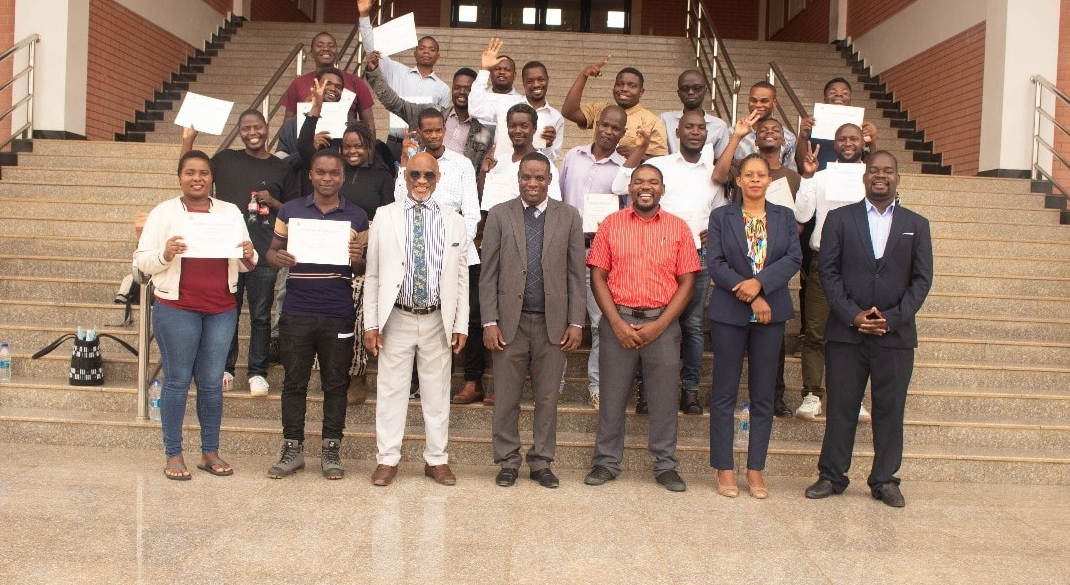
The Malawi University of Science and Technology (MUST), in partnership with Ministry of Health, recently held a two-week training program for biomedical engineers and technicians drawn from district hospitals across the country.
The Global Fund supported initiative was held from December 20 to 31, 2025 at MUST campus in Thyolo.
It aimed to bridge the gap between engineering and clinical medicine by ensuring that medical technologies are safely designed, correctly installed, and maintained in accordance with high professional standards.
The training focused on risk mitigation, advanced troubleshooting, and preventive maintenance, with particular emphasis on oxygen gas plants, incinerators, and medical imaging equipment, critical infrastructure for effective healthcare delivery.
Speaking during closing ceremony on Wednesday, which was attended by officials from government, MUST staff, and other dignitaries, Guest of Honour and Deputy Director of Curative and Medical Rehabilitation Services at the ministry, Dr Nitta Nayeja, commended the participants for their diligence, commitment, and successful completion of the program.
Dr Nayeja emphasized the importance of the skills acquired in ensuring optimal functioning of sophisticated medical equipment in public hospitals, noting the immediate and long-term impact of the training on patient care and public health.
She expressed gratitude to the sponsors and MUST for providing financial and technical support, respectively, sayingt the program’s success was a result of their generosity and sustained commitment.
“Healthcare is a shared and cross-cutting responsibility, and this collaboration serves as a model for future partnerships,” Dr Nayeja said.
Representing the MUST Vice Chancellor, Dr Duncane Batizani, Assistant Registrar (Academics) hailed the participants for their perseverance despite the demanding nature of the training, which often required extended working hours.
“I urge you to go out and be agents of change, bridge the gap, embrace innovation, and uphold ethics and compassion. Biomedical Engineering is a calling that sits at the critical intersection of medicine and engineering technology,” he said.
One of the participants, Peter Kanyika, described the training as a success and thanked MUST, the ministry, sponsors, and fellow participants for their support and collaboration.
“As we return to our respective workplaces, we do so with renewed energy, enthusiasm, and a shared commitment to applying this knowledge to strengthen healthcare delivery and technological advancement,” Kanyika said.
Previous