𝐓𝐀𝐆𝐃𝐄𝐕 𝟐.𝟎 𝐬𝐮𝐩𝐩𝐨𝐫𝐭𝐬 𝐭𝐫𝐞𝐞 𝐩𝐥𝐚𝐧𝐭𝐢𝐧𝐠 𝐚𝐭 𝐃𝐳𝐚𝐥𝐞𝐤𝐚 𝐑𝐞𝐟𝐮𝐠𝐞𝐞 𝐂𝐚𝐦𝐩
Posted By
James MphandePosted on
9th Mar, 2026
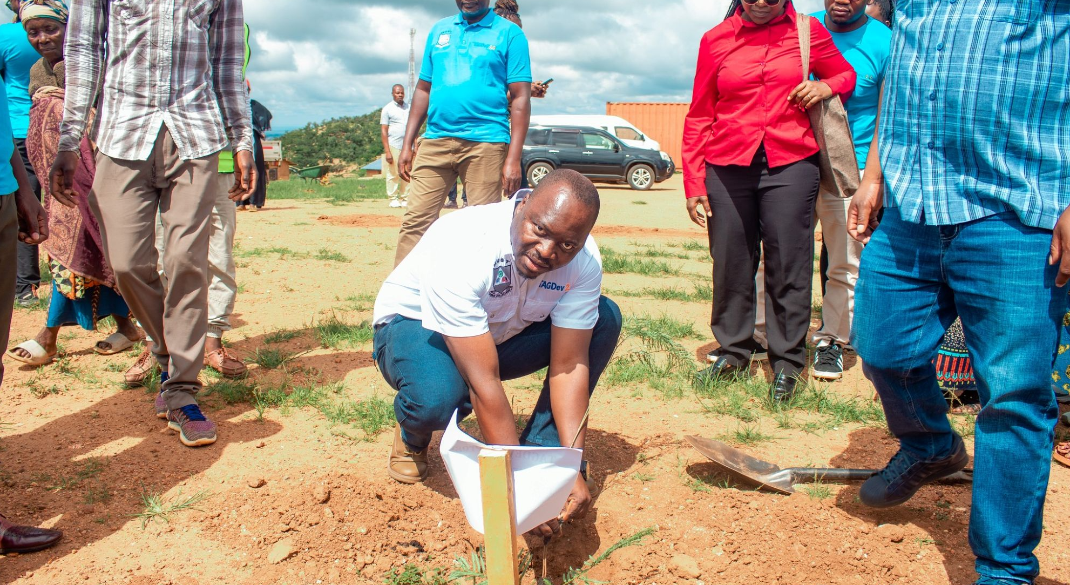
Malawi University of Science and Technology (MUST) through the Transforming African Agricultural Universities to meaningfully contribute to Africa’s Growth and Development (TAGDEV 2.0) program, on March 5, 2026 led a tree planting exercise at Dzaleka Refugee Camp in Dowa, Central Malawi.
The exercise, that saw 1,500 tree seedlings being planted on the bare Dzaleka Hill, in religious compounds, homes and other institutions, was done in partnership with TAGDEV 2.0 partners: Lilongwe University of Agriculture and Natural Resources (LUANAR) and Moravian Humanitarian Development Services (MOHDEVS) on one hand and the camp’s management team.
According to TAGDEV 2.0 program coordinator, Dr Petros Chigwechokha, the 1,500 seedlings are part of over 17,000 trees the program has planted this year in collaboration with LUANAR, which raised over 15,000 tree seedlings under the program, and other partners such as Mzuzu University (MZUNI) and University of Livingstonia (UNILIA).
Speaking at the event, MUST Vice Chancellor representative, Dr Chikondi Chisenga, who is also Executive Dean for Ndata School of Climate and Earth Sciences, said the TAGDEV 2.0 believes in empowering disadvantaged groups and apart from offering them scholarship for higher education studies, trainings and other capacity building initiatives for entrepreneurship and employability, they also support efforts to address climate change effects as they affect agriculture and other livelihoods.
Dowa District Commissioner representative Bissai Mtayamanja hailed the TAGDEV 2.0 program for the initiative, saying the increased population at the camp has brought with it huge pressure for fuelwood and farm land, leading to heavy environmental degradation.
“We have serious deforestation around the camp and neighbouring areas such as Kongwe and Dzaleka hills. We need your support in re-forestating these areas. Otherwise, the situation is getting out of hand,” he said.
Nduwimana Nasoro, one of the camp community leaders, said they are ready to work with any organisations that support climate change mitigation efforts within and around the camp.
“Last year, several houses had their roofs blown off by strong winds because the place here is bare. We appreciate that government alone cannot do everything and with the downscaling of UNHCR activities here, we call on other stakeholders to come in and support and we pledge our cooperation,” he said.
Commissioner for Refugees, General Ignancio Maulana (Retired), said while they support and appreciate the tree planting exercises, they would like to urge stakeholders involved to ensure they have mechanisms to ensure survival of the trees.
“Trees are planted but very little is done to make sure that they are looked after for high survival rate. I call upon TAGDEV and others to make sure they have an arrangement for the care of the trees after the planting. We would also welcome more support in tree planting exercises as the problem is huge here. The camp was supposed to hold 12,000 people but we now have around 60,000 refugees and the implications on the environment are dire,” he said.
LUANAR Deputy Vice Chancellor representative, Dr Tinna Manani hailed the collaborative approach to the exercise, saying her university will continue to work with institutions that promote national development and improved livelihoods among disadvantaged groups.
Previous