𝐀 𝐲𝐨𝐮𝐧𝐠 𝐦𝐢𝐧𝐝 𝐢𝐧𝐬𝐩𝐢𝐫𝐞𝐝 𝐭𝐨 𝐭𝐚𝐜𝐤𝐥𝐞 𝐜𝐥𝐢𝐦𝐚𝐭𝐞 𝐜𝐡𝐚𝐧𝐠𝐞
Posted By
James MphandePosted on
23rd Mar, 2026
At just 16 years old, Mike Bwanali has already experienced the harsh reality of climate change in a way many only hear about.
A Form One student at Liwonde Community Day Secondary School in Chibwana Village, under Traditional Authority Sitolo in Machinga District, Mike remembers one night when strong winds tore through his family’s home.
The iron sheets that once sheltered them were ripped off and blown away, leaving the house exposed and the family vulnerable.
“Life was not the same,” he recalls.
With their home damaged, Mike and his family had no choice but to seek refuge with relatives. Privacy was lost. Comfort became a luxury.
Like many families affected by extreme weather, they had to start again with very little.
But while that storm happened some time ago, the effects of climate change are still part of his daily life.
Recently, after heavy rains, the roads in his area became muddy and nearly impassable, making his journey to school a struggle. What used to be a simple walk turned into a difficult and exhausting experience not just for Mike, but for many students.
“Sometimes it is difficult to even reach school,” he says. “The roads are muddy and hard to pass.”
For Mike, climate change is not something he reads about in books. It is something he continues to live through.
Yet, in the middle of these challenges, a new opportunity has given him hope.
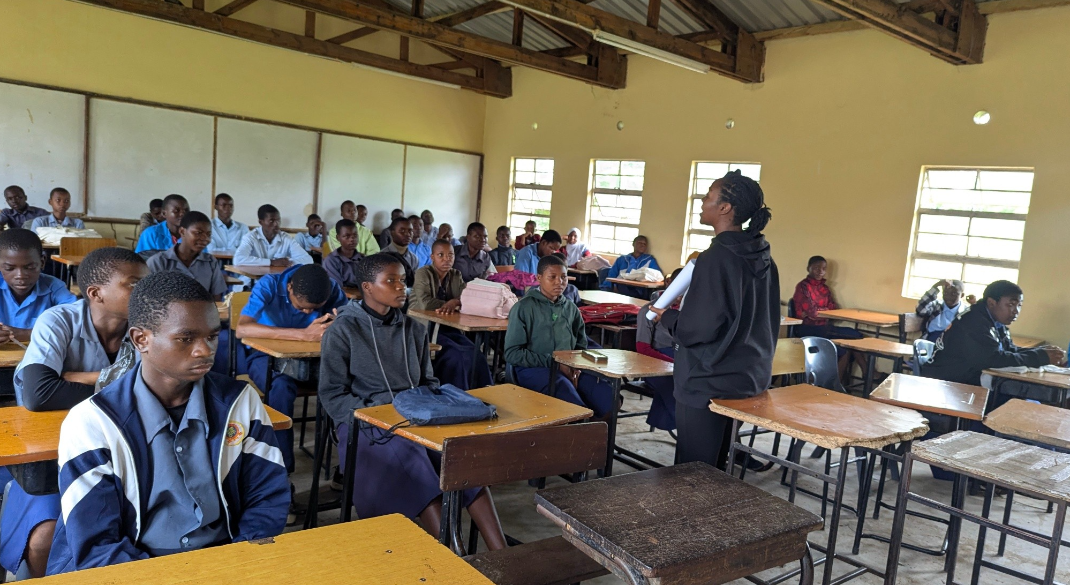
This week, the African Drone and Data Academy (ADDA), a UNICEF-funded initiative based at MUST, conducted orientation sessions in schools across Chiradzulu, Mwanza, Balaka, and Machinga districts.
During the orientation, students were introduced to Climate STEM Clubs and encouraged to take part in them. Instead of immediate enrollment, students were guided on what the clubs are about and were given application forms to apply and become members.
For Mike, that moment was a turning point.
“It has opened my eyes,” he explains. “Now I know I can take part in fighting the effects of climate change.”
Inspired by what he learned, Mike has already made a decision, he will apply to join the club.
Through these Climate STEM Clubs, students are expected to gain knowledge, skills, and innovative thinking to tackle real-life problems brought about by climate change.
These clubs are more than just extracurricular activities. They are spaces where curiosity meets action. Students will also be exposed to exploring science, technology, engineering, and mathematics as practical tools for solving everyday challenges, from muddy and damaged roads to destroyed homes and environmental degradation.
For students like Mike, this opportunity represents more than learning, it represents hope.
Instead of feeling helpless when disaster strikes, they will begin to ask questions like why is this happening and what can we do differently to protect our communities.
And most importantly, they will begin to believe that their ideas matter.
The importance of Climate STEM Clubs cannot be overstated. In a country like Malawi, where communities are increasingly affected by extreme weather, empowering young people with practical knowledge is key to building resilience. These students are not just learners, they are future innovators, problem-solvers, and leaders.
Previous