𝐌𝐔𝐒𝐓 𝐜𝐨𝐧𝐜𝐥𝐮𝐝𝐞𝐬 𝐄𝐒𝐈𝐀 𝐭𝐫𝐚𝐢𝐧𝐢𝐧𝐠, 𝐞𝐪𝐮𝐢𝐩𝐬 𝟕𝟔 𝐩𝐫𝐨𝐟𝐞𝐬𝐬𝐢𝐨𝐧𝐚𝐥𝐬 𝐭𝐨 𝐚𝐝𝐯𝐚𝐧𝐜𝐞 𝐬𝐮𝐬𝐭𝐚𝐢𝐧𝐚𝐛𝐥𝐞 𝐝𝐞𝐯𝐞𝐥𝐨𝐩𝐦𝐞𝐧𝐭
Posted By
James MphandePosted on
12th May, 2026
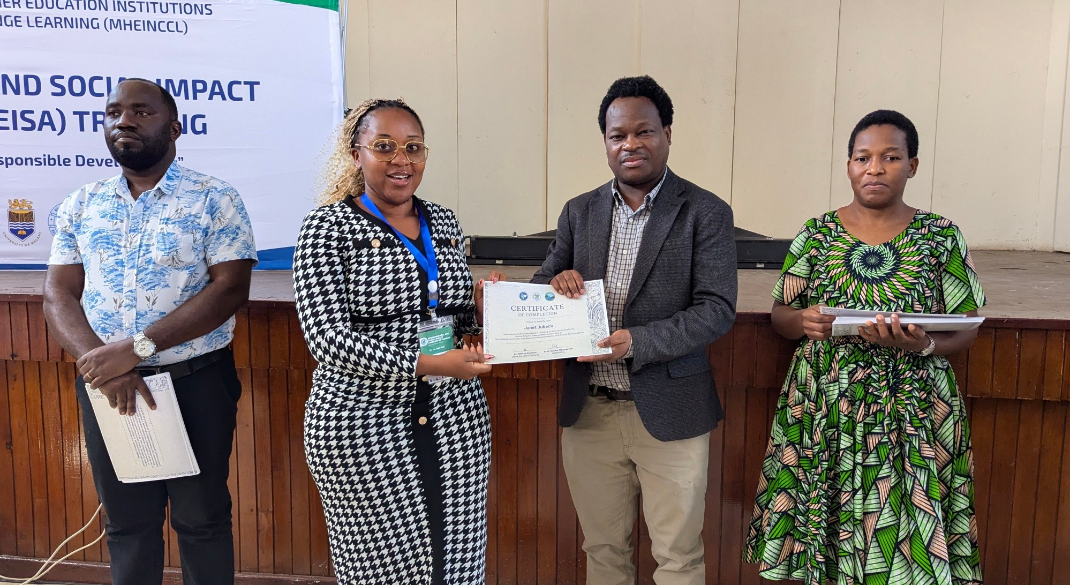
MUST, through the Malawi Centre for Excellence in Environmental and Social Sustainability (MCEESS), on April 24, 2026 successfully concluded a five-day course on Environmental and Social Impact Assessment (ESIA), equipping 76 participants with critical skills to strengthen environmental and social standards in Malawi.
The training, held at MUST’s City Campus in Blantyre under the Ndata School of Climate and Earth Sciences (NSCES), brought together participants from both public and private institutions across the country.
With support from the World Bank Group, the program focused on enhancing knowledge and practical skills in environmental and social risk management, an essential pillar for sustainable development.
MCEESS is a collaborative initiative involving several higher education institutions in Malawi, including MUST, Lilongwe University of Agriculture and Natural Resources (LUANAR), University of Malawi (UNIMA), Malawi University of Business and Applied Sciences (MUBAS), Mzuzu University (MZUNI), Catholic University and Nalikule College of Education.
Speaking during a graduation ceremony on April 24, Guest of Honour, Professor Cosmo Ngongondo, Chairperson of the Malawi Higher Education Institutions Network on Climate Change Learning, congratulated the participants for their commitment and urged them to uphold professionalism in their work.
“This training has prepared you to contribute meaningfully to national development. I encourage you to apply the knowledge gained and maintain high professional standards in your respective fields,” he said.
A Senior Environmental Specialist from the World Bank, Mercy Chimpokosera Msewu, reaffirmed the institution’s commitment to supporting Malawi’s development agenda, particularly in managing environmental and social risks.
One of the participants, Joseph Kazima, commended the World Bank for its support and thanked the organisers and facilitators for delivering rich and insightful content.
“This training has been very valuable. We have gained practical knowledge that we will apply in our work. I encourage my fellow participants to take what we have learned and use it to improve project implementation in our respective institutions,” he said.
The successful completion of the training highlights MUST’s continued commitment to building professional capacity and promoting sustainable development through knowledge sharing, collaboration, and innovation.
Previous