𝐌𝐔𝐒𝐓 𝐢𝐧 𝐀𝐈-𝐛𝐚𝐬𝐞𝐝 𝐟𝐞𝐫𝐭𝐢𝐠𝐚𝐭𝐢𝐨𝐧 𝐬𝐲𝐬𝐭𝐞𝐦 𝐭𝐨 𝐚𝐝𝐯𝐚𝐧𝐜𝐞 𝐜𝐥𝐢𝐦𝐚𝐭𝐞-𝐬𝐦𝐚𝐫𝐭 𝐚𝐠𝐫𝐢𝐜𝐮𝐥𝐭𝐮𝐫𝐞
Posted By
James MphandePosted on
30th Jul, 2026
MUST, through the Transforming African Agricultural Universities to Meaningfully Contribute to Africa's Growth and Development (TagDev 2.0) program, is implementing an Artificial Intelligence (AI)-based fertigation system to improve production of high-value crops and promote climate-smart agriculture.
The project is being led by Dr Jabulani Nyengere and reflects MUST's commitment to using research, innovation and technology to address food security, climate change and sustainable agricultural development.
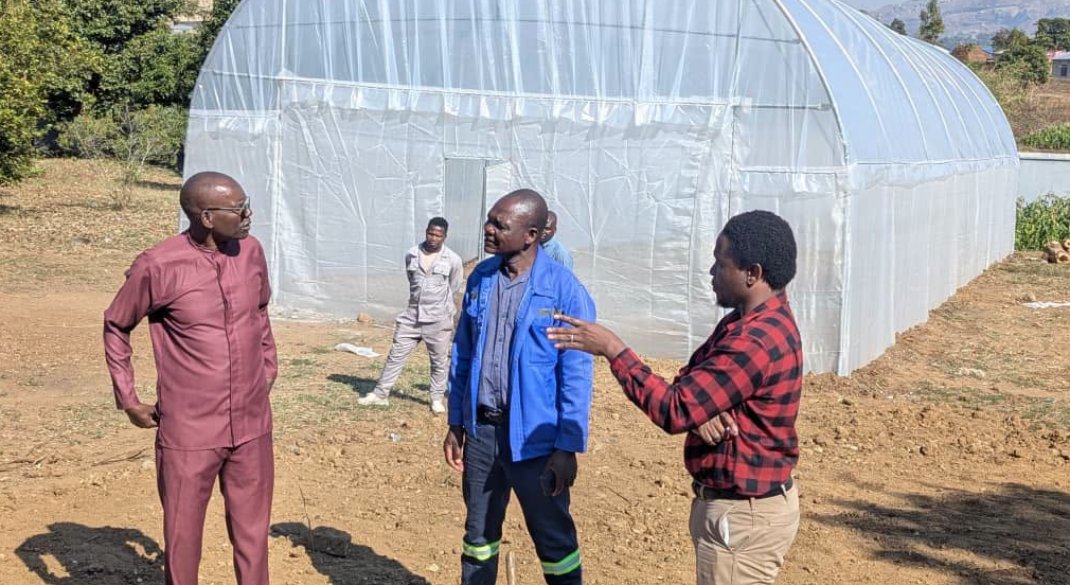
Implementation of the project has already commenced at MUST's main campus in Thyolo, where a greenhouse has been installed.
The project team is now preparing to start planting high-value crops early next month, marking an important milestone in the university's efforts to demonstrate use of AI in modern agriculture.
Speaking about the initiative, Dr Nyengere said the project combines innovation and practical learning to improve agricultural productivity while preparing farmers and communities to adapt to climate change.
"We are using AI to make farming more efficient, productive and climate-resilient while providing students and communities with practical skills that can transform agriculture," said Dr Nyengere.
The AI-based fertigation system combines irrigation and fertilizer application into one smart system.
Using real-time data, the technology automatically adjusts the amount of water and nutrients supplied to crops according to their stage of growth.
This ensures that crops receive the right amount of nutrients at the right time, reducing waste while improving productivity, crop quality and efficient use of resources.
The greenhouse will support the production of high-value crops, including tomatoes, bell peppers and cucumbers.
These crops require careful nutrient management throughout their growth cycle and are expected to benefit significantly from AI-driven precision farming.
As part of the initiative, the project will also establish a smart tree nursery to produce climate-resilient seedlings capable of withstanding drought, floods and changing weather patterns.
Unlike conventional nurseries, the AI-assisted system will regulate watering and nutrient application to strengthen seedlings during their early stages of growth.
This approach helps prepare young trees to survive under challenging environmental conditions once transplanted to farms or restoration sites.
Beyond crop production and tree propagation, the facility will serve as a practical learning centre where MUST students, the youths, farmers and surrounding communities will receive hands-on training in advanced agricultural technologies.
Participants will learn about AI-powered fertigation, precision irrigation, climate-smart farming practices and sustainable tree nursery management.
The project is also expected to improve access to clean, high-quality planting materials, contributing to increased agricultural productivity, improved food security and enhanced household incomes.
Through the TagDev 2.0 program, MUST continues to strengthen its role in agricultural research and innovation by developing practical solutions that respond to climate change while equipping future generations with knowledge and skills needed to transform agriculture in Malawi and beyond.
Previous